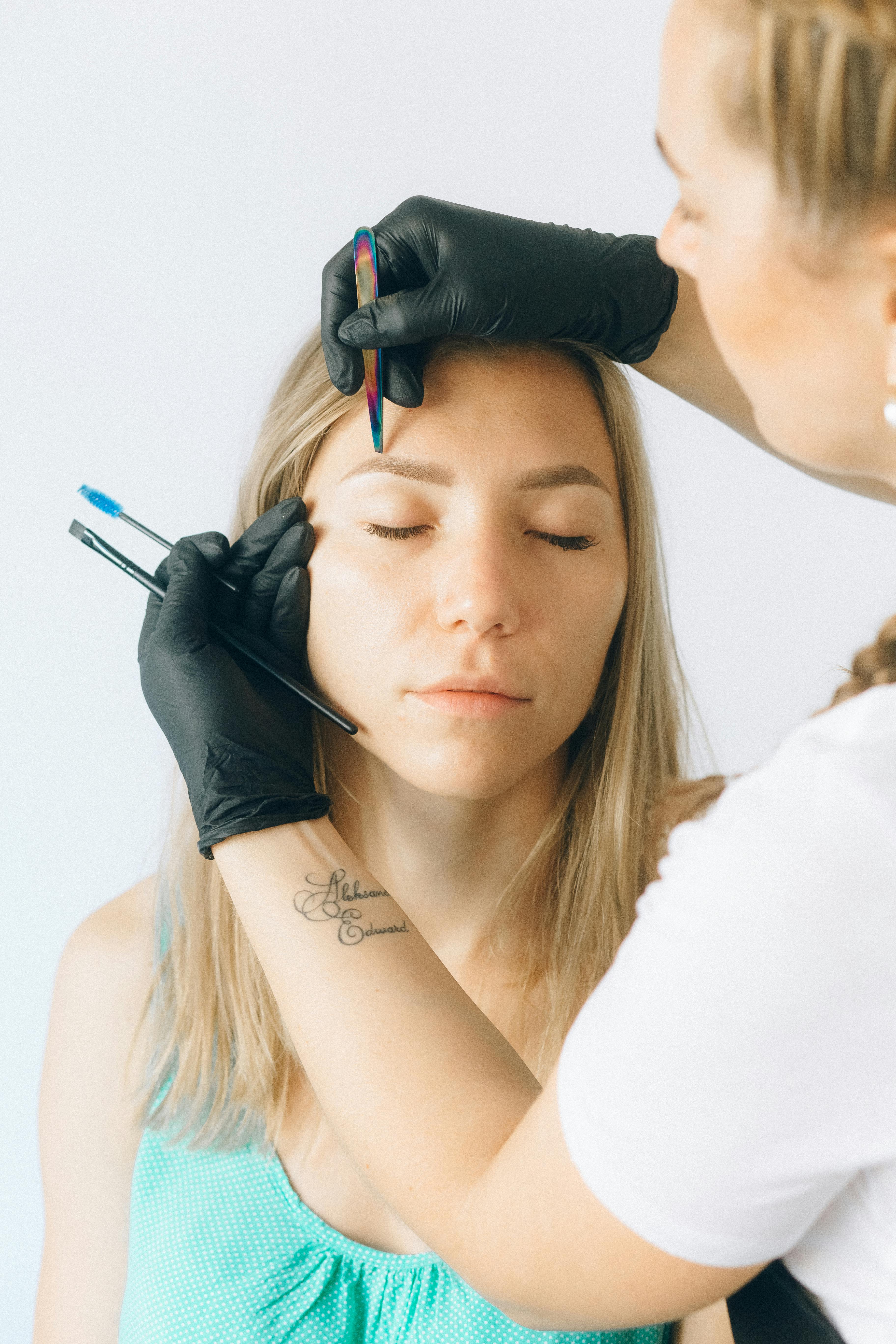
FINE TOOLS AROUND THE BROW, ILLUSTRATIVE
Cosmetic Tattoo Career Guide
Your first course gives you a pattern. A career is what you do with it next: which technique you make your own, what you add and when, how you record your progress, and the moment advanced training starts to make sense.
I
I — SPECIALISATION
Choose a cut
Brow work splits broadly into two families. Hair-stroke techniques, such as microblading, feathering and nano brows, imitate individual hairs. Shading techniques, such as powder and ombre brows, build soft density from fine dots. Each asks something different of your hand: stroke work needs direction and spacing, while shading needs patience and even pressure.
Specialising early doesn’t mean limiting yourself. It means repeating one technique often enough that your results become consistent before you add another. Pick the family that matches the brows you most want to create, and the tool you feel most in control of.
COMPARE THE PATTERNS
II — ADDING TECHNIQUES
Add in layers
Techniques build on each other. Adding them in a logical order means each new skill starts from a steady base rather than from scratch.
Mapping, skin, hygiene and one core technique. Most of the skill lives here, and every later technique leans on it.
LAYER B · SECOND FAMILY
Once strokes are consistent, shading widens the range of clients you can suit. The reverse works too if you started with shading.
LAYER C · COMBINED
Combination brows join strokes at the front with shading through the tail. They make most sense once you’re comfortable with both.
III — PORTFOLIO
Keep your own record
A portfolio is your evidence, so it should hold only work you did yourself. Photograph before, immediately after and once healed, using the same light and angle every time so the images can be compared fairly. Always get the client’s consent before you share a photo.
Beyond showing clients, the record teaches you. Healed results reveal whether your strokes held their spacing and whether your shading settled evenly. Those patterns tell you what to practise next, and they show a trainer exactly where you stand.

BRUSHES AND BROW TOOLS
IV — ADVANCED TRAINING
When to refit
Advanced training is for working artists refining what they already do, not a shortcut past the foundations. If most of these ring true, it’s worth a conversation.
Your healed results are consistent across different skin types.
You can explain why each brow was mapped the way it was.
Your portfolio points to specific problems you can’t yet solve alone, such as corrections or difficult skin.
You’re comfortable with at least one technique family and curious about the other.
You’ve checked the licensing and premises requirements that apply where you work.
V — NEXT FITTING
Plan the next piece
Tell us where your skills are now and which technique you want to add, and we’ll help you find the course that fits.