Nano Brows: Machine Hair Strokes Explained
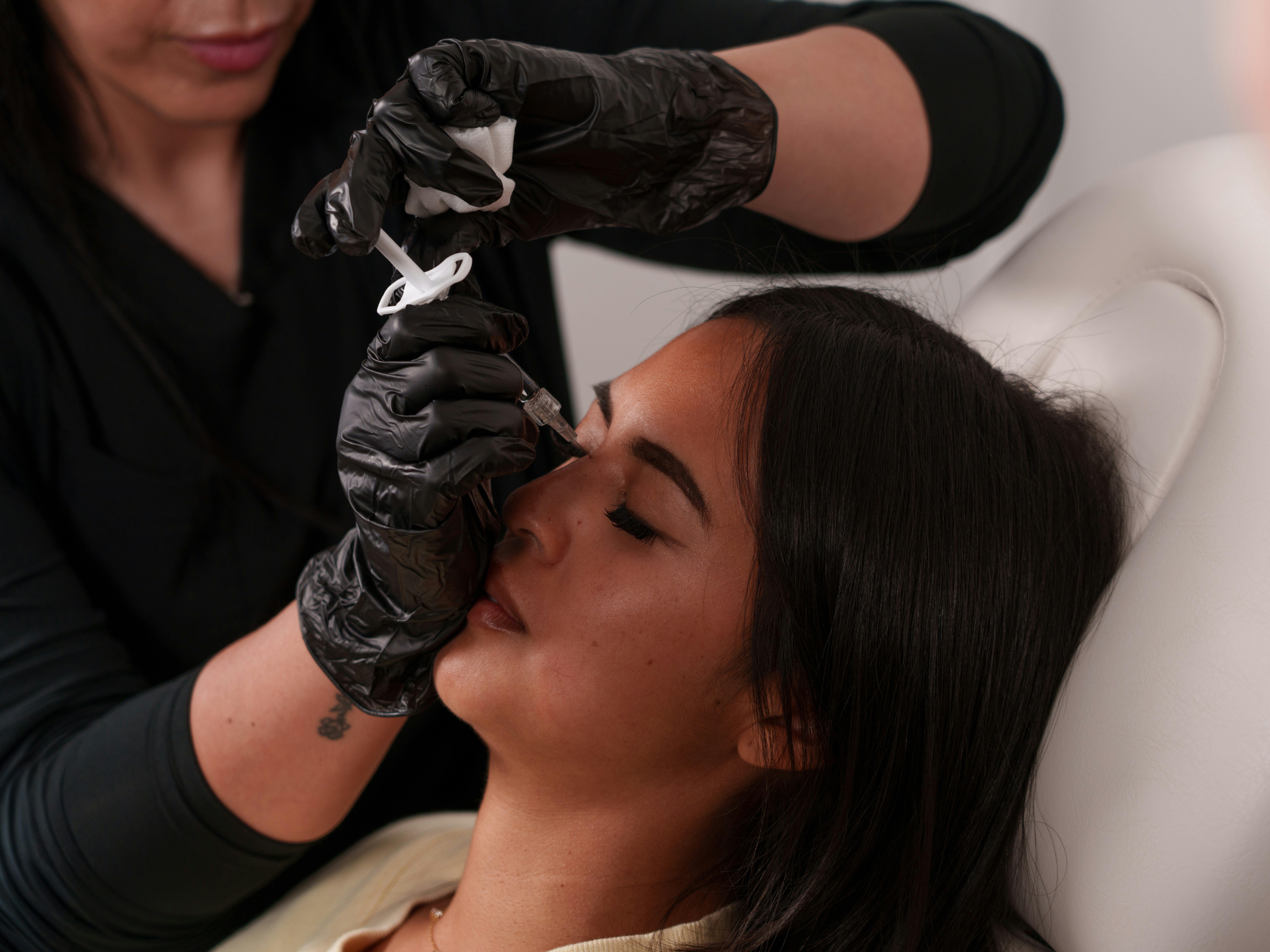
Nano brows create hair-like strokes with a cosmetic tattoo machine and a single fine needle. The result reads like microblading from a distance, but the stroke is built in a completely different way. Here is what that difference means for the artist holding the tool.
CUT OF THIS ARTICLE
I What a nano stroke is
II Machine vs hand tool
III Skills to build
IV Where to go next
MACHINE WORK AT THE BROW
I
What a nano stroke is
In microblading, the artist pulls a row of tiny blades through the skin to cut each stroke by hand. In nano brows, a machine moves a single fine needle rapidly in and out while the artist guides it along the line of a hair. The stroke is built from many small implantations rather than one continuous cut.
Because the machine controls the needle movement, the artist’s work shifts from pressure to control: steady hand speed, a consistent angle and an even stretch of the skin. Get those right and the strokes can look crisp and fine. Get them wrong and they can look patchy or blur as the skin heals.
II — MACHINE VS HAND TOOL
Two tools,
From a distance the finished brows can look alike. Up close, and at the training table, they ask different things of your hand.
The machine stroke
Tool: cosmetic tattoo machine with a single fine needle
How pigment goes in: repeated small implantations along the stroke
Main control: hand speed, angle and stretch
Often chosen: when a crisp stroke is wanted on skin where cut strokes may soften
The hand-cut stroke
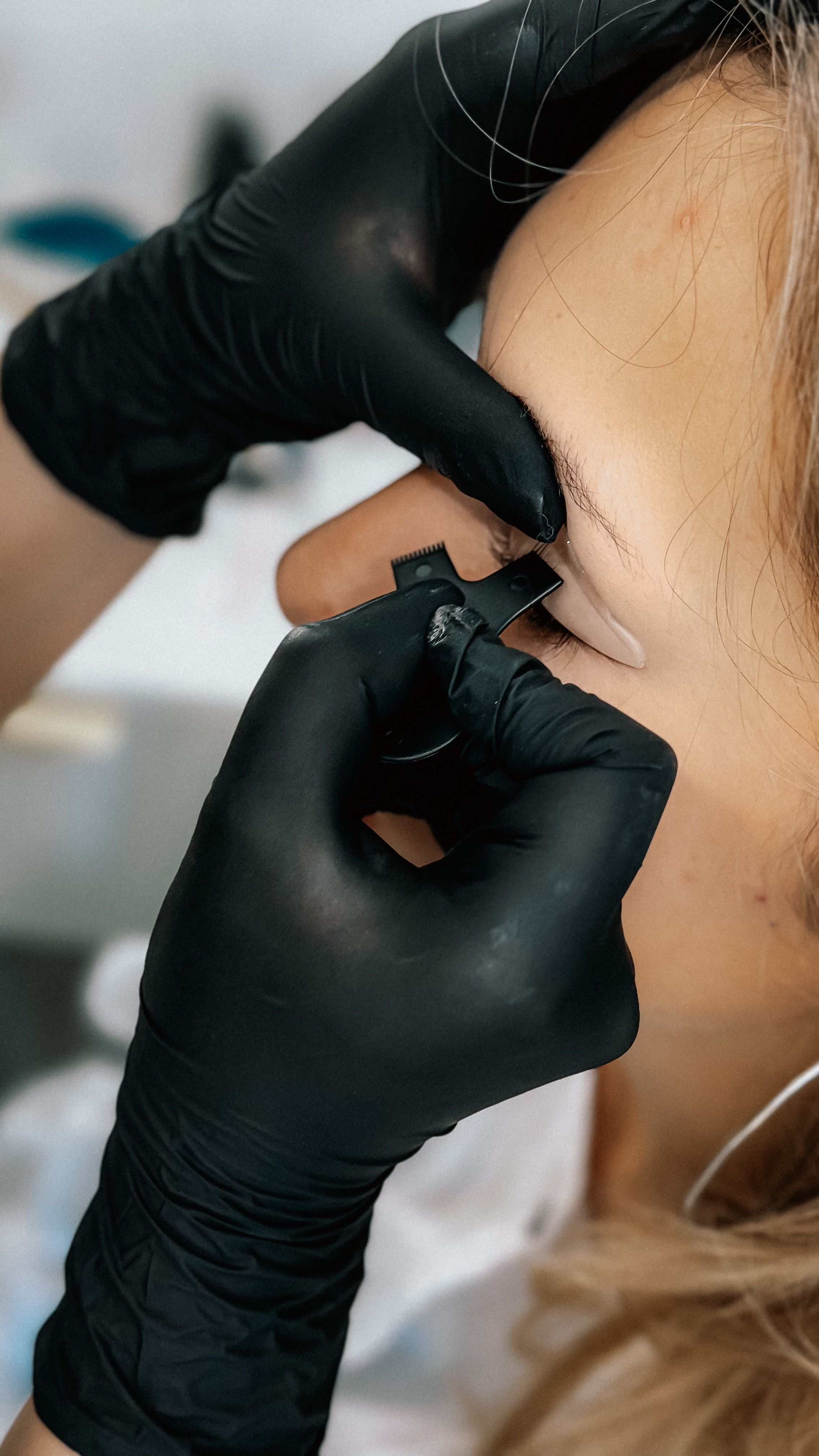
Tool: manual hand tool fitted with a fine blade
How pigment goes in: a shallow cut drawn along the stroke
Main control: pressure, depth and blade angle
Often chosen: by artists who want direct feel of the stroke through the tool
TATTOO TOOL NEAR THE TEMPLE
III — SKILLS TO BUILD
Skills a nano artist builds
01 · Measure and design
Map the brow, then plan stroke direction and density so every hair follows natural growth.
02 · Handle the machine
Learn to hold the machine steadily, set it up cleanly and keep the needle angle consistent through each stroke.
03 · Control speed and stretch
Pair even hand speed with a firm skin stretch so pigment sits evenly along the whole stroke, with no gaps or heavy spots.