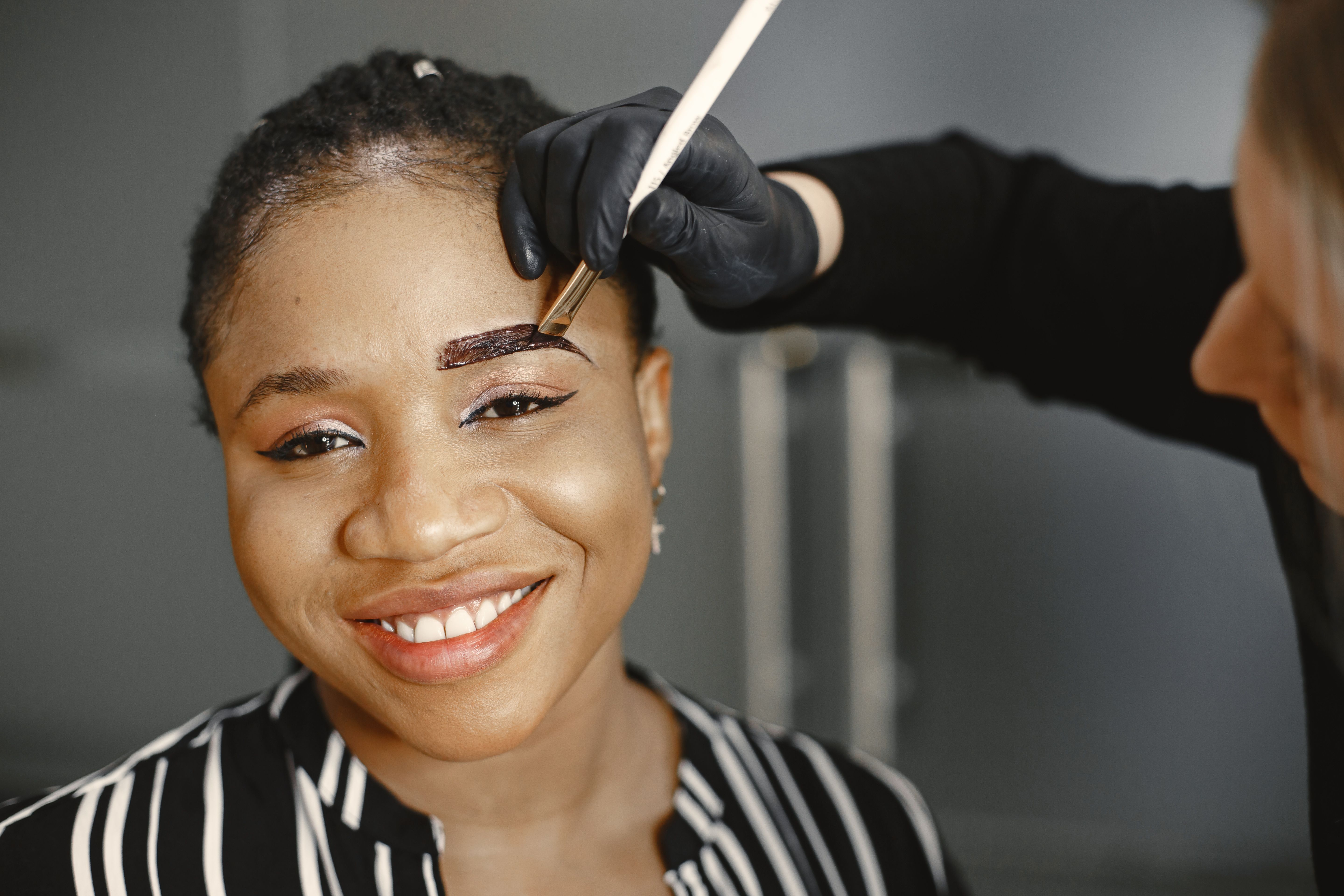
PIECE 07 · GLOVED HAND APPLYING PIGMENT AT A CLIENT’S BROW, REFERENCE IMAGE
07
Combination Brows Course
Professional training in brows that combine crisp hair strokes at the front with soft shading through the body and tail. You plan every zone from a measured brow map, then blend the zones so no seam shows.
I — COURSE OVERVIEW
Three zones
A combination brow is cut in pieces, like a tailored garment. Each piece has its own technique, and the skill is joining them. This course teaches you to read where strokes belong, where shade belongs and how to grade one into the other.
The stroke zone
Fine, directional hair strokes at the head of the brow, where natural hair grows upward and the eye reads texture first. You practise stroke angle, spacing and taper so the front stays light.
The blend
This is the part most students find hardest. Strokes soften into a light shade, and shade rises gently between the strokes. You’ll learn how to grade density so the change reads as a gradual shift, not a line.
The shade zone
Soft shading builds definition through the arch and tail, framing the strokes.
II — MEASURE
Plan the combination
You don’t choose where strokes stop and shading starts by eye. You measure it. In this course you map the start, arch and tail, then mark the stroke zone, the transition and the shade zone as pieces of one pattern.
You also learn to adjust the pattern to the client in front of you: brow hair density, skin, face shape and the finish they want. A fuller natural brow may need fewer strokes. A sparse front may need the stroke zone extended.
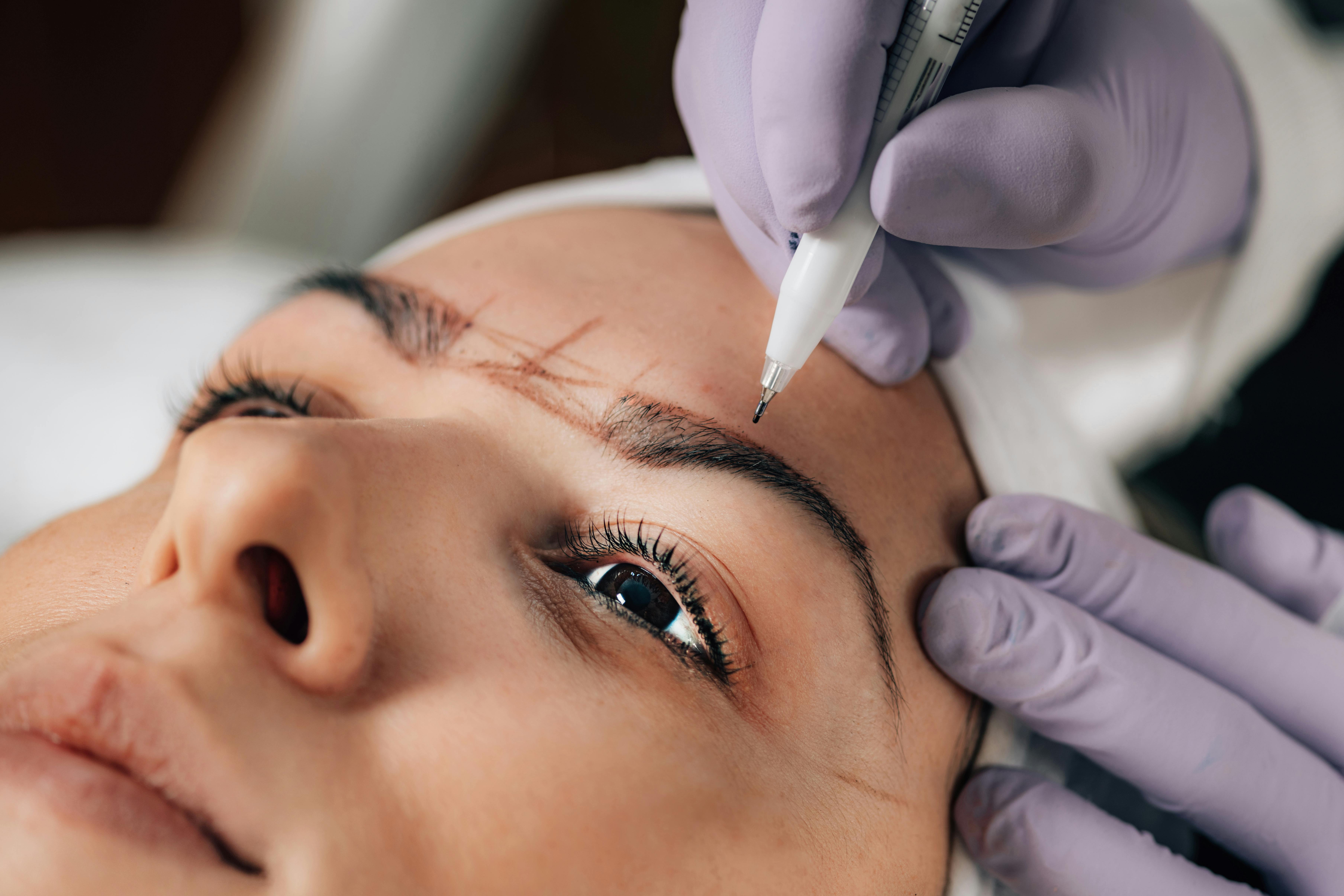
II — MEASURE · GLOVED HAND WITH A PEN AT THE BROW, REFERENCE IMAGE
III — THE FITTING
Who it suits
This course brings two techniques together. It suits you if you already have some foundation in hair strokes or shading, or you’re ready to learn both with a clear plan. When you enquire, we’ll talk through your background and whether this course or a single-technique course is the better place to start.
Brow mapping and zone planning · hair stroke placement and direction · soft shade building · density grading across the transition · colour choice to suit the client · skin assessment and client consultation · hygiene and safe working practice.
Hair strokes at the front of the brow, soft shading through the body and tail, and blending the two so the stroke zone and shade zone join without a hard edge.
You work through four steps: watch the technique demonstrated, map and plan the zones, practise strokes, shading and blending, then refine your work with trainer feedback. Each step builds on the one before.
IV — TRAINER INFORMATION
Taught at the table
Your trainer watches your hand as you work. They correct stroke angle, pressure and shading density during practice, so you don’t just find out at the end. Find out who teaches and how they approach the craft.
V — STUDENT WORK
Student work, as it is added
Genuine, consented student work is published in the Student Work Gallery as it is added. When combination work appears, look closely at the transition zone. That’s where you can see a combination brow has been well fitted.
How is a combination brow different from powder or ombre brows?
Powder and ombre brows are shaded all the way through. A combination brow adds hair strokes to the front, so it has texture there and definition through the body.
Do I need previous brow training?
Some foundation in strokes or shading helps, but the right starting point depends on your background. We’ll discuss it with you when you enquire.
Which part of the technique takes the most practice?
Usually the transition. Grading stroke density into soft shade takes patient, repeated practice with guided correction from your trainer.
How do I choose between this and a single-technique course?
VII — ENROL
Fit both cuts to your hand
Ask about dates, format and what’s included in the Combination Brows Course.
RELATED PATTERNS