Feathering Brows: Technique Guide
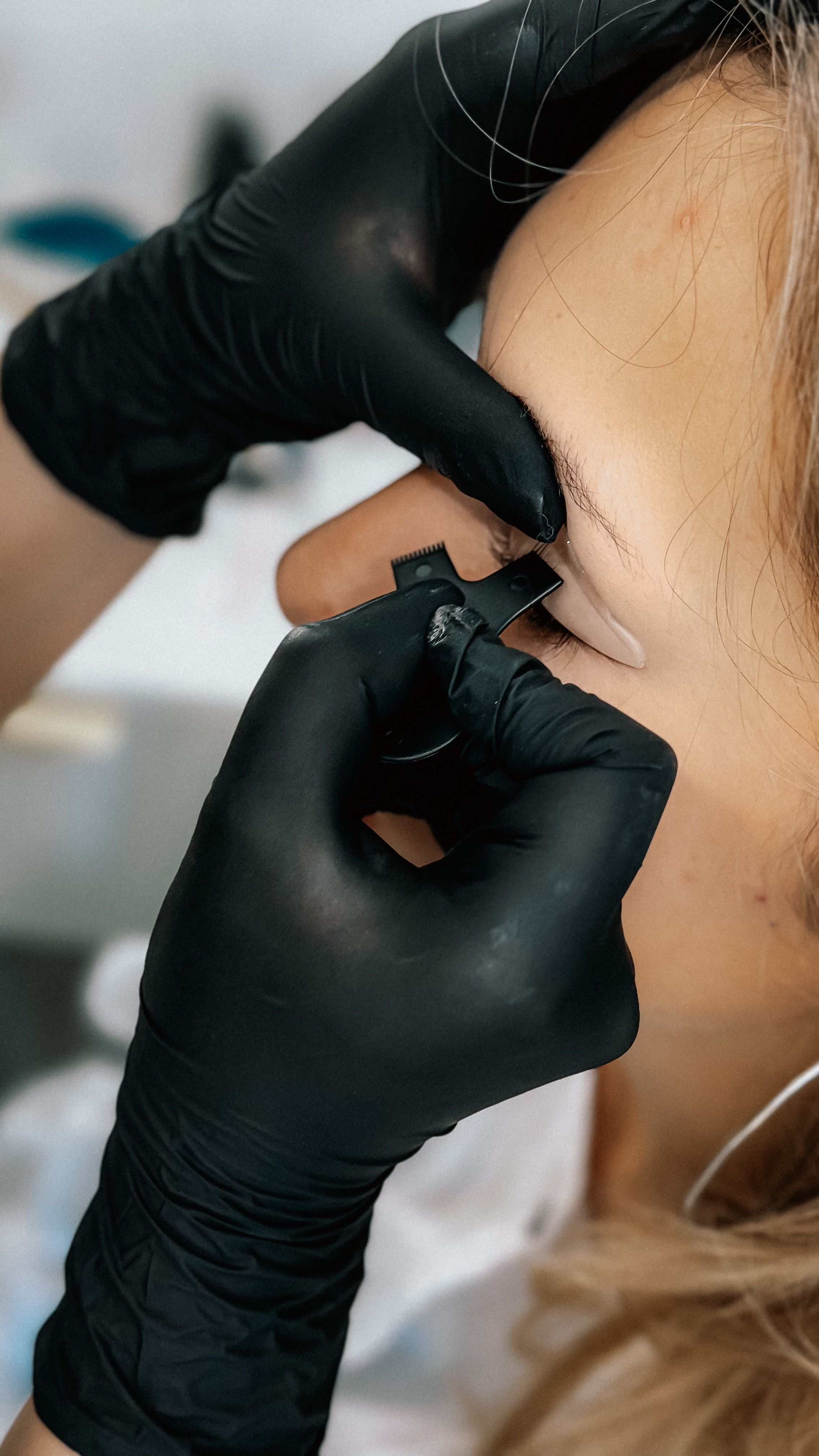
HAIR STROKE · TATTOOING TOOL AT THE TEMPLE, REFERENCE IMAGE
Feathering describes fine, individual hair strokes set into the brow so the finished result reads as hair rather than a filled shape. For an aspiring artist, the skill is not the single stroke. It is the pattern: where each stroke begins, which way it travels and how it sits beside the next one.
PATTERN OF THIS ARTICLE
I The stroke
II Stroke patterns
III Natural movement
IV Feathering and microblading
COURSES IN FOCUS
I
One hair at a time
A feathered stroke imitates a single brow hair. It is fine at the tip, has a slight curve and follows a direction. When strokes are too thick, too straight or too evenly spaced, the brow looks drawn rather than grown.
This is why training starts away from skin. Students repeat stroke drills on practice surfaces until the pressure, angle and length stay steady. Only then does the question of placement on a real face come in, and that begins with measurement, as the Brow Mapping guide explains.
FITTING NOTE
A good stroke is judged in company. Look at it beside its neighbours before you judge it alone.
The brow in pieces
Natural brow hair does not grow one way. A feathering pattern is planned zone by zone, the same way a tailor cuts a garment from separate pattern pieces that have to meet cleanly.
FRONT
Strokes near the start of the brow usually lift upward and sit more sparsely, so the front stays soft instead of looking blocked in.
BODY
Through the body, strokes lean toward the tail and overlap in layers. Upper and lower rows angle toward each other to build fullness.
ARCH
At the arch the direction turns. This is where uneven spacing or a sudden change in angle is easiest to see.
TAIL
Strokes shorten and flatten toward the tail, then taper, so the brow finishes to a fine point.
Follow the grain
Movement is what separates a convincing feathered brow from a stencil. Every client has their own growth direction, density and face shape. A pattern learned in class is a starting point to adjust, not a stamp to repeat.
Artists learn to read the existing hairs before drawing anything: where they grow sparse, where they curl and where gaps need filling. The mapped outline sets the limits, and the strokes inside it follow the client’s natural grain.
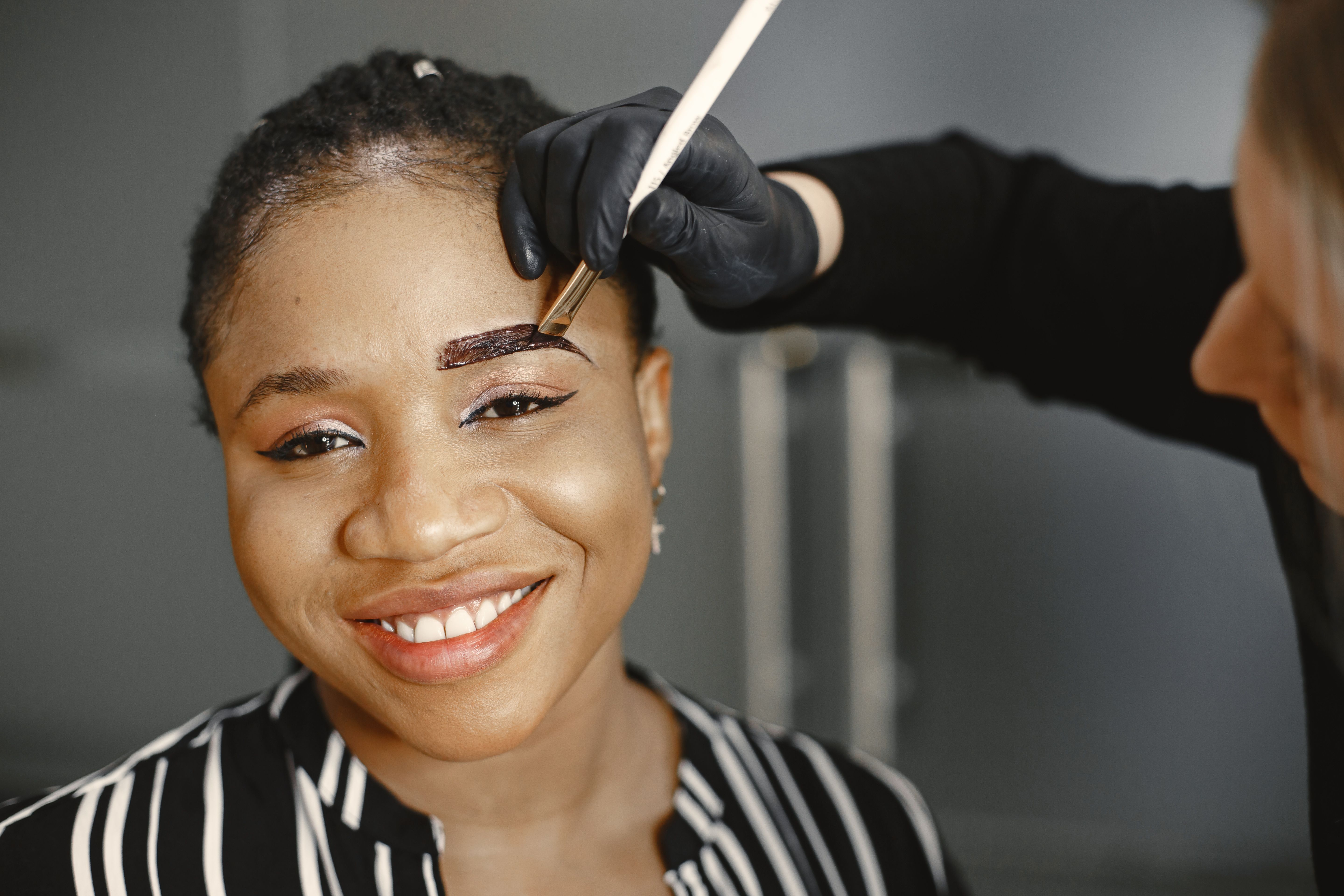
BRUSH WORK ALONG THE BROW
Close cousins, different cuts
The names overlap across the industry, and studios don’t always use them the same way. Compare what each term describes, not just the label.
03 — FEATHERING
The look of layered hair
Refers mainly to the finished effect: fine, layered hair strokes that give feathered texture. The focus is on pattern and movement.
02 — MICROBLADING
Strokes cut by hand
Names the method: a manual hand tool creates each hair stroke. Many feathered brows are made this way, so the two skill sets overlap closely.
07 — COMBINATION
Strokes with shade
Pairs feathered strokes at the front with soft shading through the body and tail. It suits artists who want both hair texture and depth.