Eyebrow Tattoo Training: What to Expect
Before a single stroke reaches skin, a good eyebrow tattoo course builds a foundation: how skin and pigment behave, how to work cleanly, how to measure a brow and how to practise until your hand is steady. This guide walks through each stage in the order most artists meet them.
PATTERN OF THIS ARTICLE
I Theory
II Hygiene awareness
III Brow mapping
IV Practice work
V Technique progression
Theory first
01
What the theory covers
Training usually opens with the material you will work on. That means the basic structure of skin, how pigment settles and softens over time, and why the same technique can heal differently on oily, dry or mature skin. You also study facial proportion, colour and undertone, so shade choices come from reasoning rather than guesswork.
Hygiene awareness as a habit
Cosmetic tattooing breaks the skin, so clean practice is part of the craft, not an extra. Expect to learn how to set up and break down a station, handle single-use items, avoid cross-contamination and understand why local health requirements matter. These habits are rehearsed until they happen without thinking.
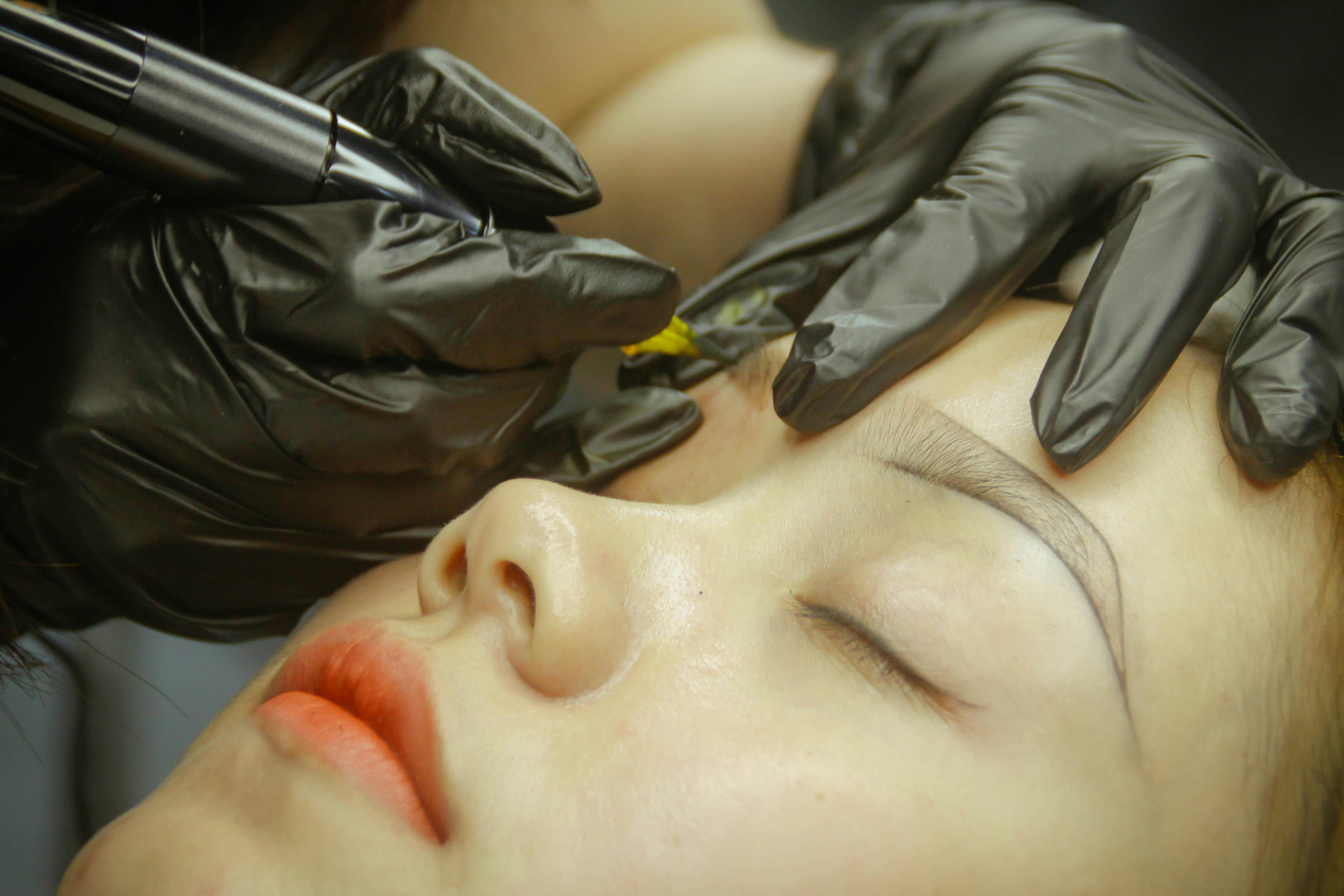
PIECE 01 — THE HAND AT THE BROW · REFERENCE IMAGE
Brow mapping
Mapping is where a brow is designed. Using the face’s own landmarks, you find where the brow should begin, where the arch should sit and where the tail should end, then check both sides for balance.
Every technique that follows depends on this stage. A beautifully placed stroke inside a poorly measured shape still looks wrong, so expect to map repeatedly, on paper and on models, until the measurements feel natural.
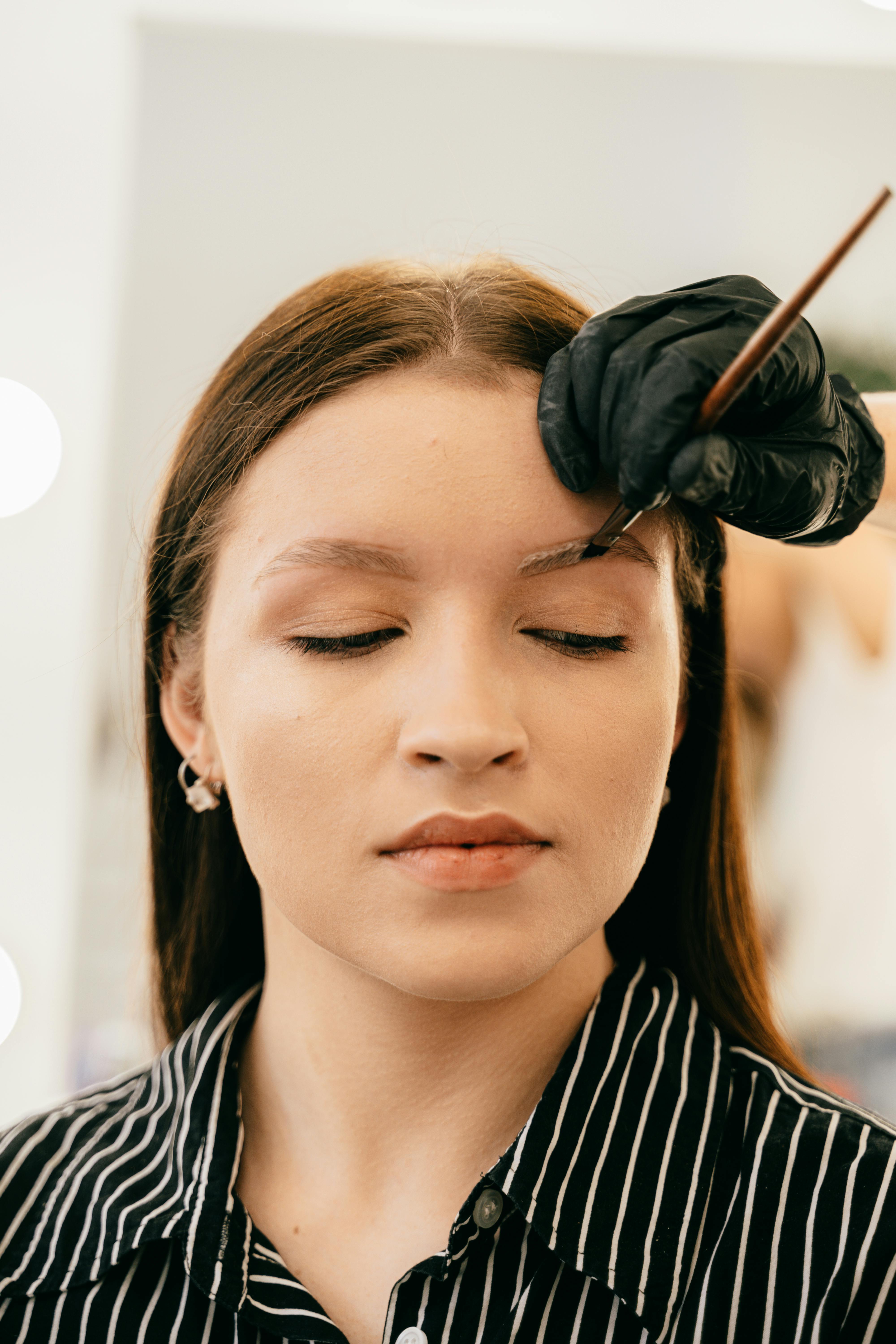
III — MEASURE · PIGMENT REFINED ALONG THE BROW, REFERENCE IMAGE
Practice work and progression
Skill grows in layers. Each layer is repeated and reviewed before the next is added, and the pace depends on the student and the course.
Practice skins
Stroke and shading drills on synthetic practice pads train pressure, angle and rhythm without risk to a client.
Full brow layouts
Single strokes become whole brows: hair-stroke direction, density and gradient laid inside a mapped outline.
Supervised model work
With a trainer close by, you consult, map and work on a live model, learning to read skin as you go.
Review and refine
Work is studied closely, with feedback on symmetry, spacing and saturation, so the next brow is better fitted.