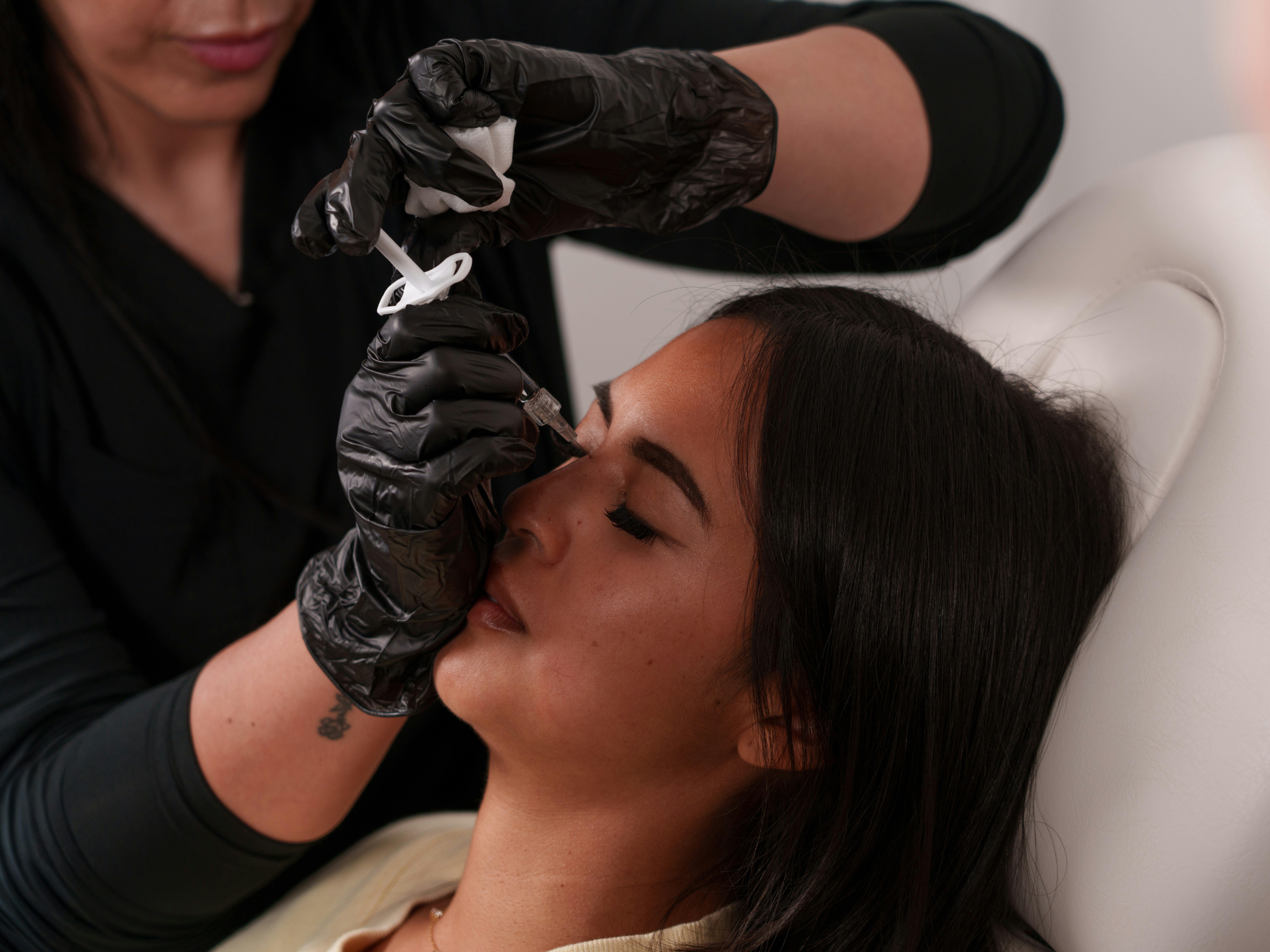
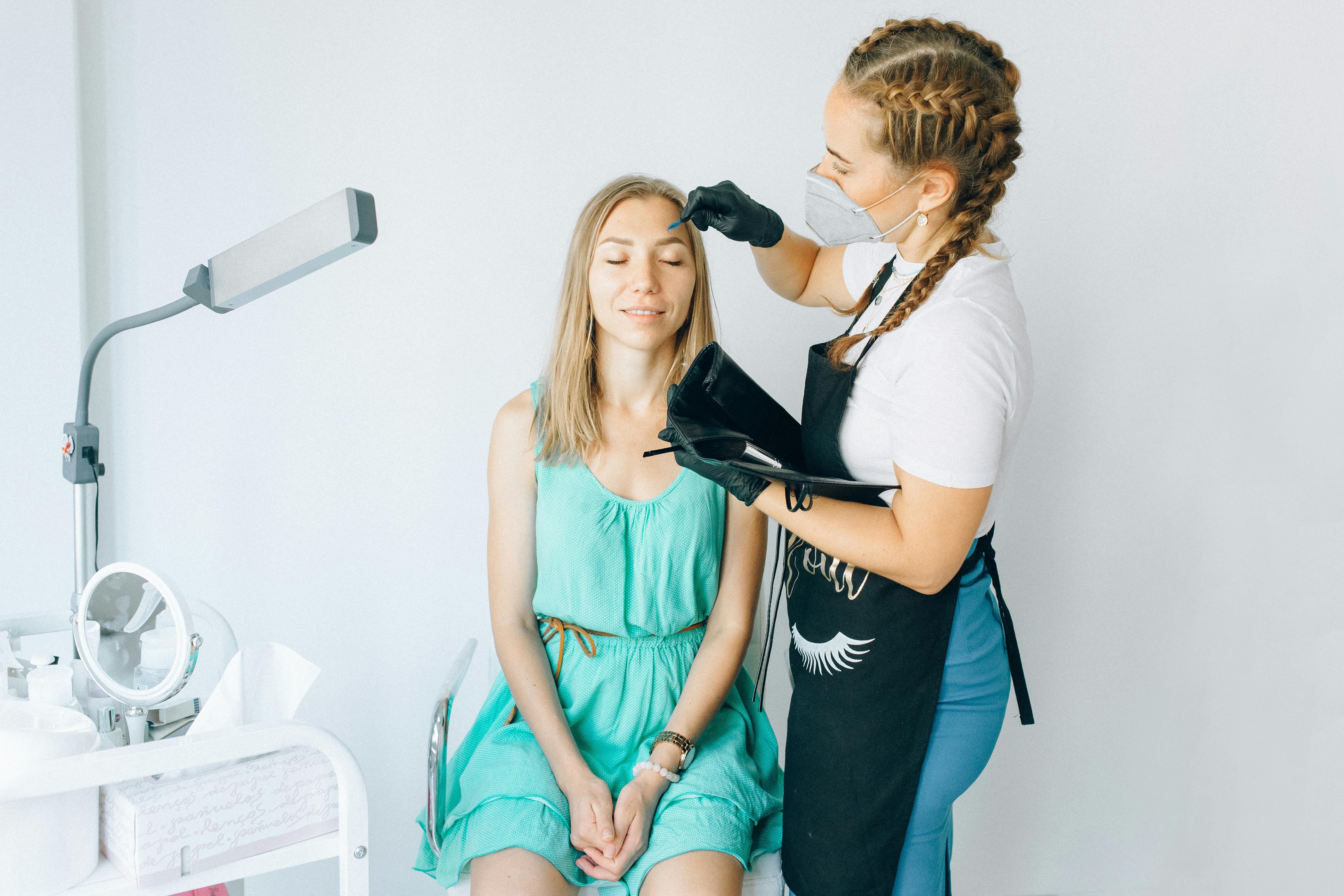
This gallery is being prepared for genuine student work and training results from Eyebrow Tattoo Courses Australia. It will be grouped the way the courses are taught (hair stroke, shading and combination), so each piece can be studied for technique, not just admired as a result.
GALLERY INDEX
I Hair stroke
II Shade
III Combination
IV Consent
V Reading the work
BRUSHES AND BROW TOOLS
I – III — THE PATTERN GROUPS
A strong brow portfolio is sorted by method, because a hair stroke and a powder finish are judged on different things. The gallery will follow the same three groups used across our courses, so once genuine student work is published you can compare like with like and move straight to the pattern you want to learn.
reference image — genuine student work to be published here
This frame is kept for fine, individual strokes made by hand tool or machine. When student work is published here, look at stroke direction following natural growth, crisp tapered ends, and spacing that stays even without looking combed into rows.
reference image — genuine student work to be published here
This frame is kept for soft powder and gradient ombre finishes. When student work is published here, look for tone built in passes rather than blocked in, a front that fades softly, and a tail with a clean edge that holds its shape.
reference image — genuine student work to be published here
This frame is kept for brows that pair hair strokes with shading. When student work is published here, the test is the seam: strokes and shade should meet without a visible line, and both should sit on the same measured map.
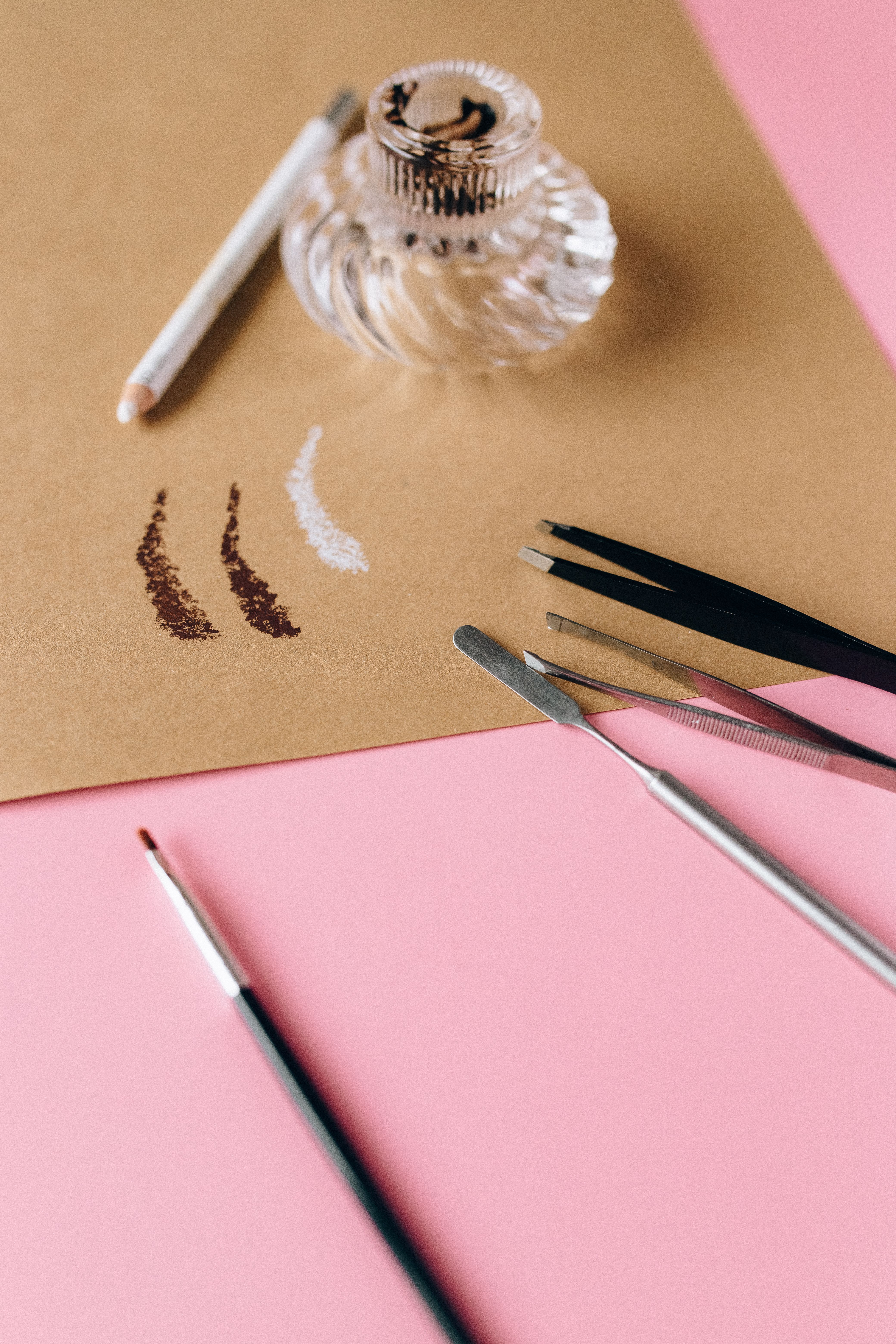
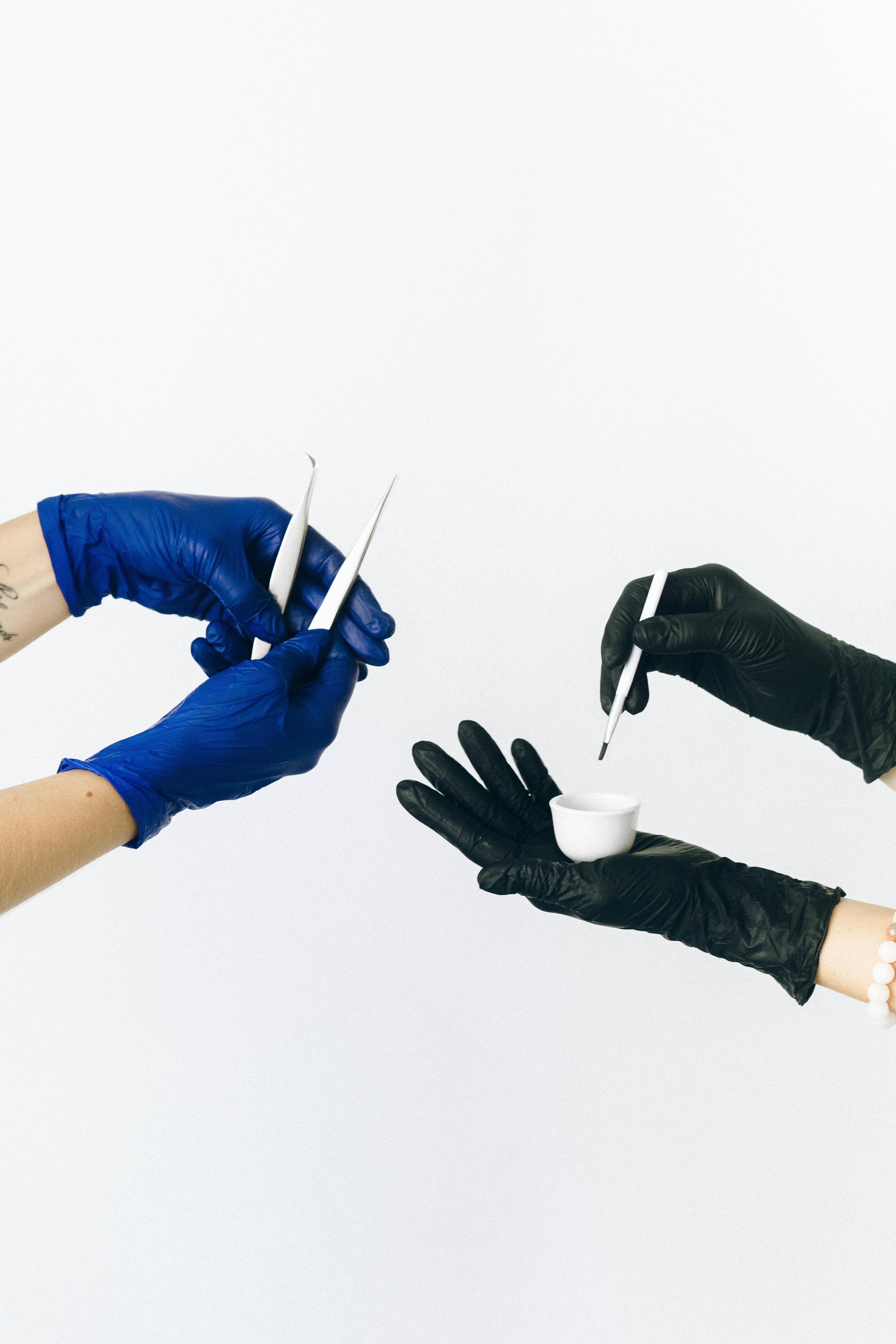
TOOLS SET OUT BEFORE A SESSION, REFERENCE IMAGE
IV
Every brow in a training gallery belongs to two people: the student who made it and the model who wore it. Work will appear here only when both have agreed to it being published.
Images will be cropped to the brow zone and captioned by technique, not by name. That keeps attention on the stroke, the shade and the shape, which is what you are here to study.
01 Symmetry. Do both brows start, arch and end at matching points on the face?
02 Mapping. Does the shape suit the bone structure, or does it look drawn from a stencil?
03 Direction. Do strokes follow the way natural hair grows at the front, body and tail?
04 Tone. Is shading even and soft, with no patchy or heavy blocks?
05 Restraint. Does the brow make the face look better without taking it over?
V